


JCF-1680 Analog Cable Icing Sensor
Monitoring parameters: icing, ice thickness, temperature,
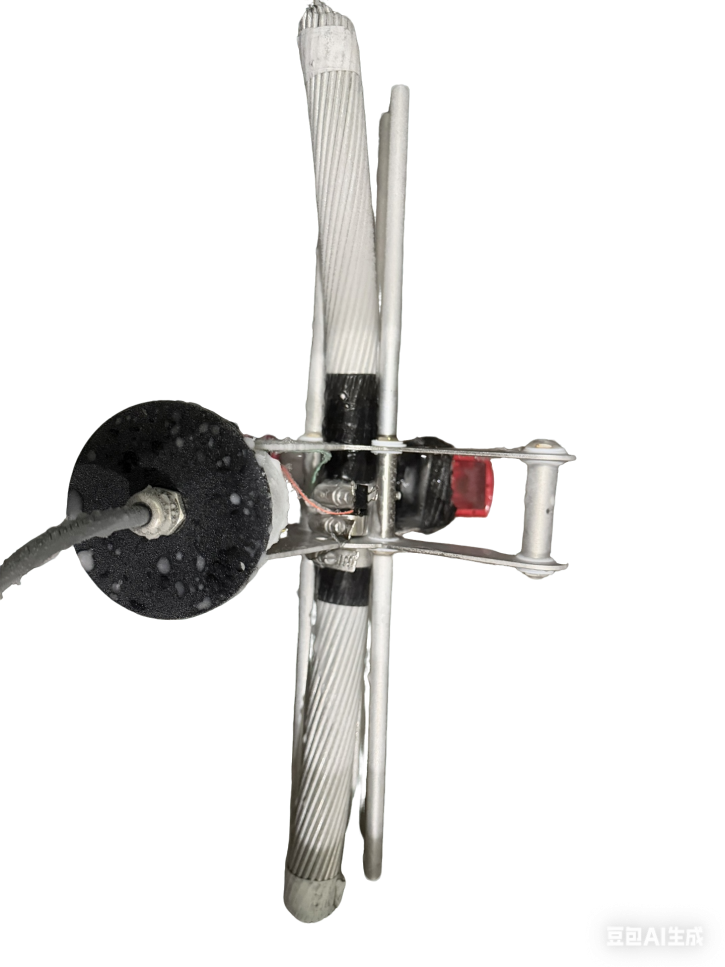
Simulated wire structure that more closely mimics cable icing conditions
Low power consumption, ensuring long battery life during winter outdoor use
Monitoring is not affected by icing, strong winds, or fog, enabling 24/7 monitoring
Heating function included
Product Features
Utilizes microwave disturbance detection technology
Provides icing warnings and alarms
Multi-parameter fusion algorithms enhance detection accuracy
Monitoring parameters: ice presence, ice thickness, temperature
Prevents the risk of power transmission towers collapsing due to ice accumulation
Compact sensor design facilitates installation, with versatile mounting options
Unique structural design withstands extreme pressure and is highly durable
The optimal choice for various de-icing systems
Product Overview
The JCF-1680 Icing Monitoring Sensor utilizes an analog wire structure combined with unique microwave detection technology and temperature analysis to enable real-time monitoring of icing conditions on various types of cables, communication antennas, and high-speed rail cables. It issues ice accumulation alerts for the monitored area, calculates ice thickness, assesses the risks of ice accumulation in real time, and provides de-icing control commands to activate de-icing systems. This ensures the safe operation of equipment in severe icing conditions, improves operational efficiency, and reduces energy consumption for de-icing.
The icing monitoring system features a flange-mounted design, and its simulated conductor form closely mimics real-world cable environments. It supports distributed installation and is easily mounted on cable towers and other icing-prone areas, thereby addressing the issue that existing non-contact icing monitoring methods cannot accurately reflect icing conditions. The sensor is equipped with a built-in heating function to reduce the probability of false negatives and false positives.
Compared to traditional methods such as tension-based icing and image-based icing monitoring, microwave icing monitoring technology offers lower power consumption and higher sensitivity; it does not require self-de-icing to function; and it is unaffected by wind and snow.
Application Areas
High-voltage power grids, outdoor equipment, outdoor antennas, wind turbine blades, drones, etc.
Technical Specifications
Detection Parameters: Icing, Icing Thickness, Temperature
Icing Detection Range: 0.2 mm to 50 mm
Minimum Icing Thickness: 0.2 mm
Maximum Icing Thickness: 50 mm
Icing Alarm Threshold: 0.2 mm to 50 mm (adjustable)
Measurement Accuracy: ±2% FS
Temperature and Humidity
Measurement Range: -40–120°C, 0–100% RH,
Temperature Measurement Resolution: 0.01°C
Accuracy: ≤±0.3°C (@25°C, typical)
≤±3% RH (@25°C, 20%–80% RH, typical)
Humidity Measurement Resolution: 0.05% RH
Communication Protocol: Modbus RTU
Operating Temperature: -40°C to 85°C
Storage Temperature: -55°C to 85°C
Operating Voltage: 3.3 VDC or 5–30 VDC
Operating Humidity: 0–100% RH
Mounting Type: Flange Mount
Protection Rating: IP68


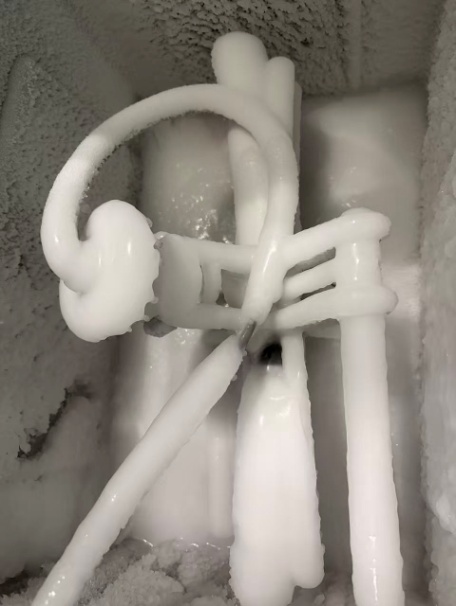
Dimensional Diagram
Note: If there is a risk of lightning strikes outdoors, we recommend installing an RS485 lightning protection module.
Beijing Jiecheng IoT Technology Co., Ltd.


Phone: 18611648453 (same as WeChat)
18250846591 (same as WeChat)
QQ: 37691046
Email: 37691046@qq.com
Address: Building A, Guangxingyuan Internet Smart Technology Park, Bao'an District, Shenzhen